TechGuy Interaction Design
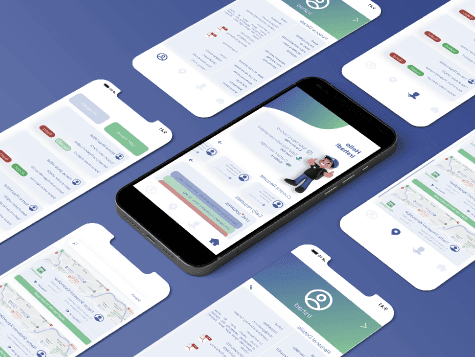
At TechGuy, I led the end-to-end design of the brand identity and responsive interfaces for customers, admins, and engineers, creating a customer app and admin/technician dashboards that addressed key stakeholder pain points.
Identifying The Pain Points
We interviewed all the stakeholders to understand their pain points, constraints and touch points within the service flow. Following are the pain points discovered throughout the user search process.



Problems Identified
Each stakeholder interacts with the service flow at different touch points and with different goals. Because communication was happening entirely through WhatsApp, there were frequent gaps in visibility, missed updates, and delays.
Our goal was to design interfaces that: support better information visibility, minimize back-and-forth by providing real-time updates between engineers and admins, and facilitate seamless service delivery to customers.
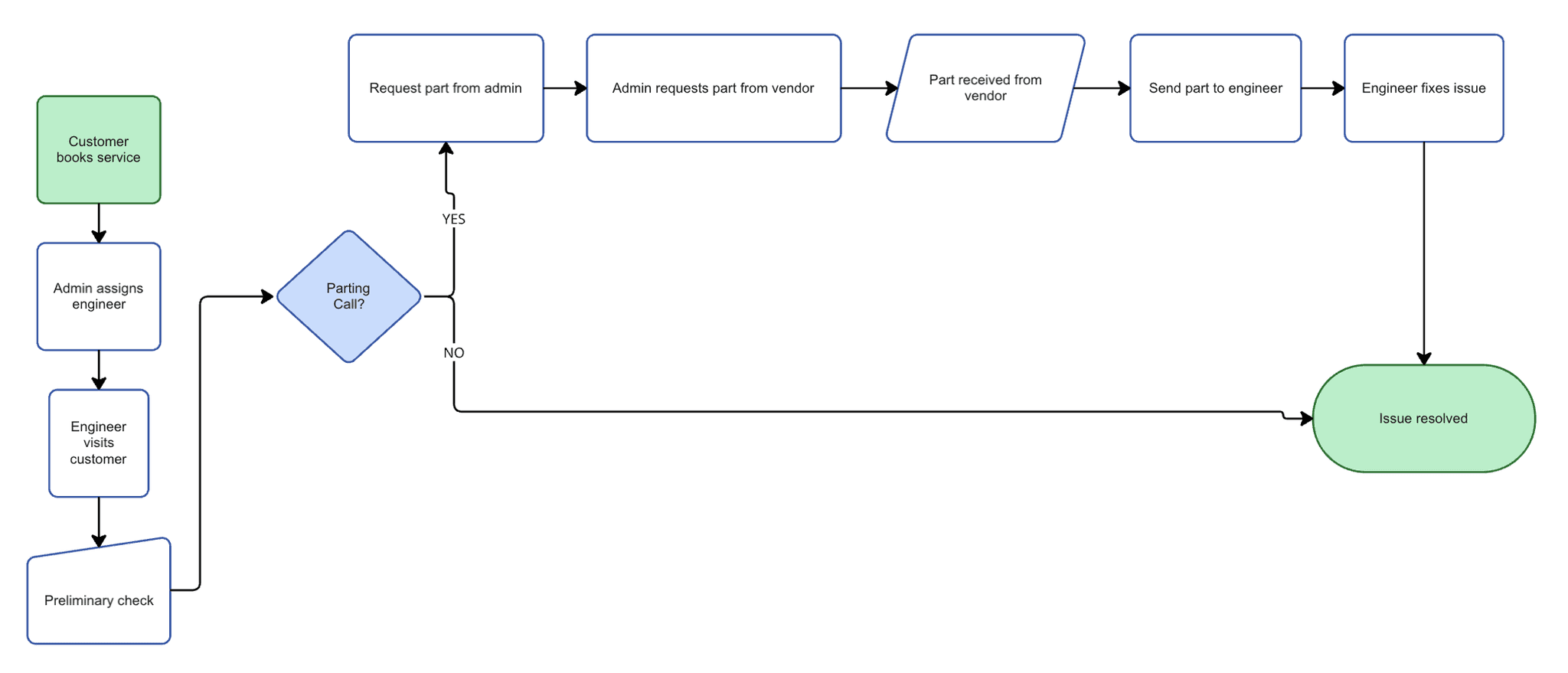
Service flow of a service request at TechGuy
“Right now we’re managing everything on WhatsApp with customers and engineers. It works, but things get missed and there’s no real way to track or stay organized.”
- Founder
Comprehensive App Flow
From interviews with the founder and stakeholders, we brainstormed how each interface should align with the service flow and identified the touchpoints for customers, engineers, and admins.
This work evolved into a Comprehensive App Flow and Information Architecture, a blueprint that not only mapped the service journey but also detailed every screen interaction and UI decision.
For viewing better quality, click here
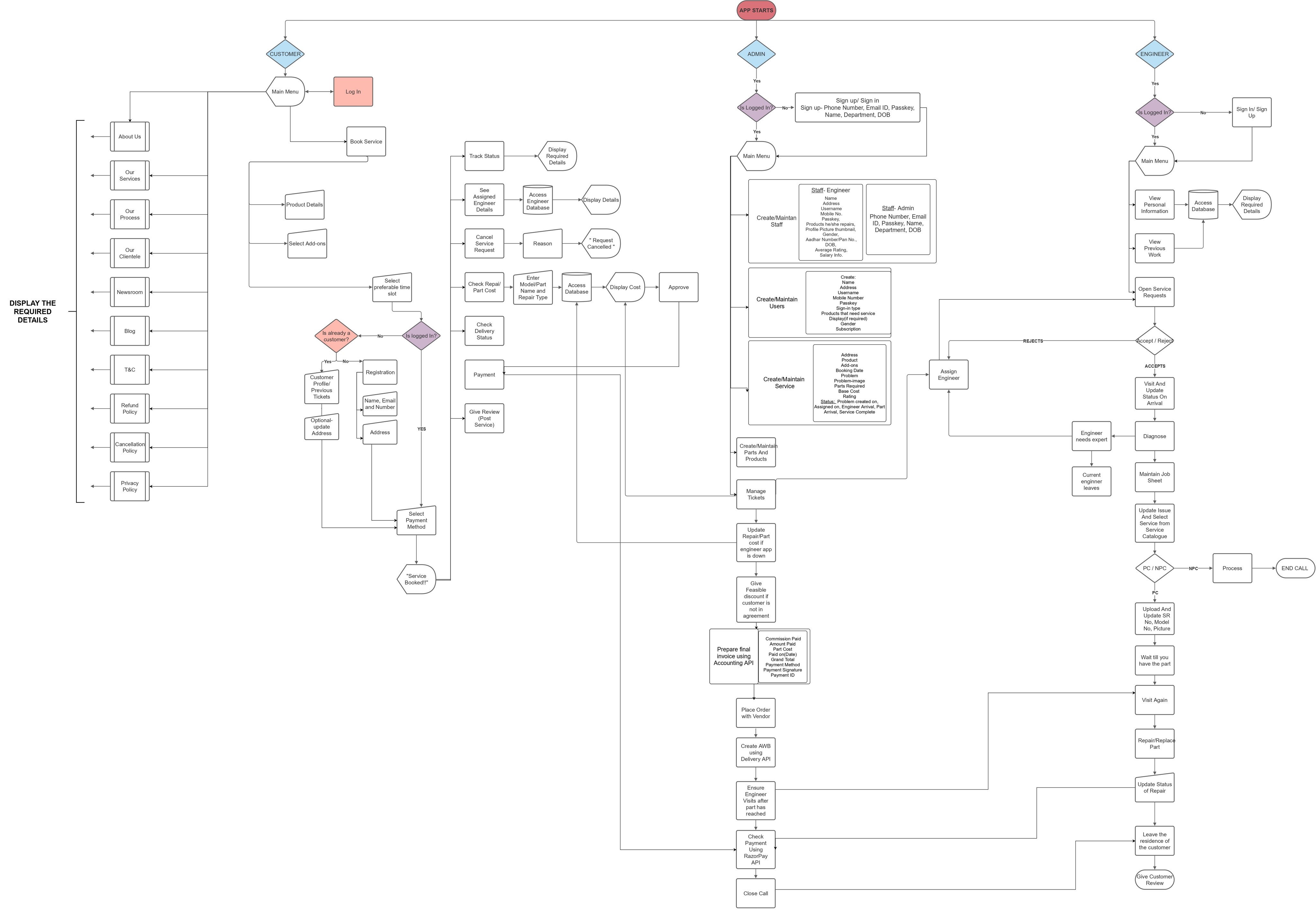
Brainstorming Concepts
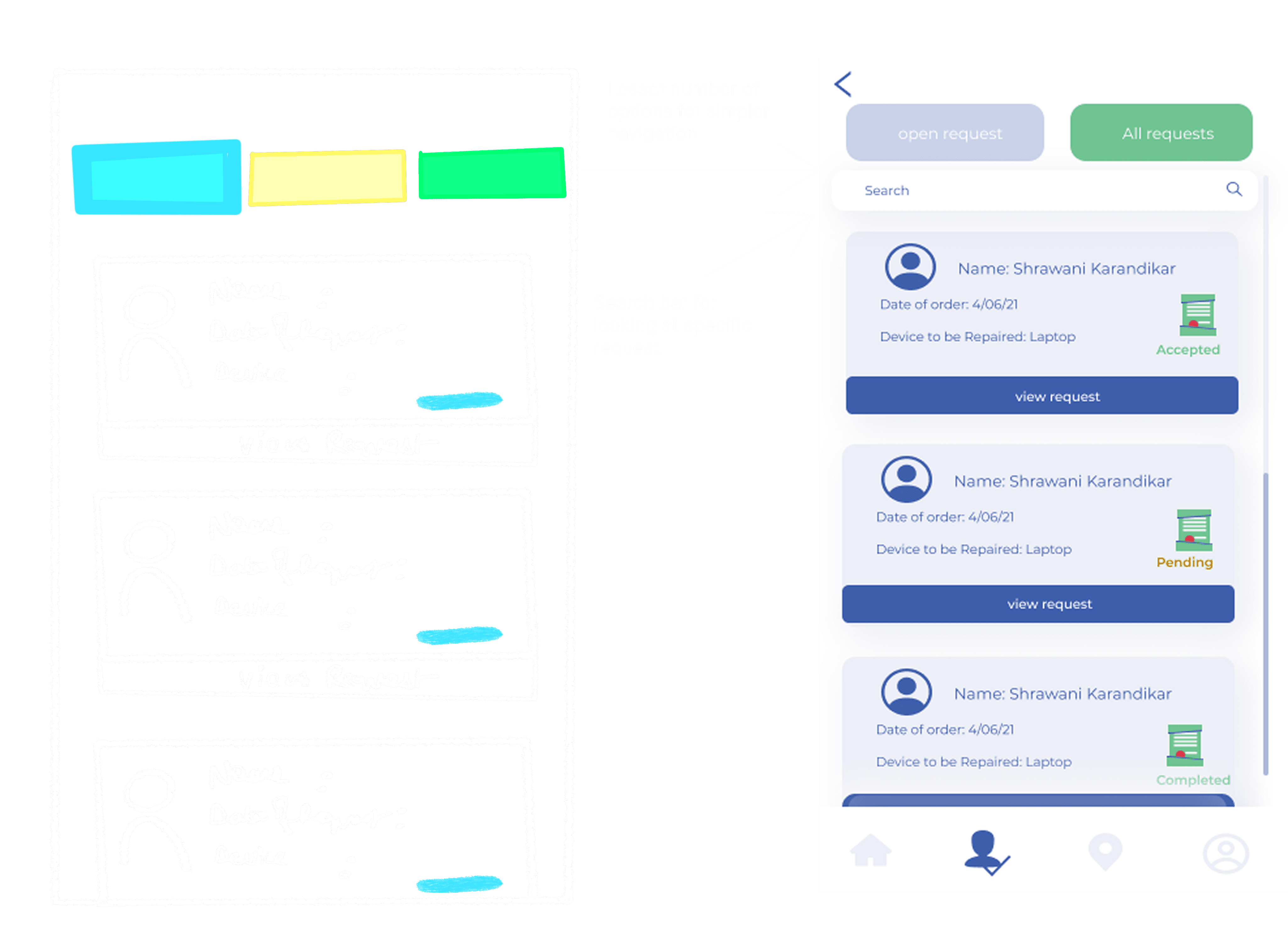
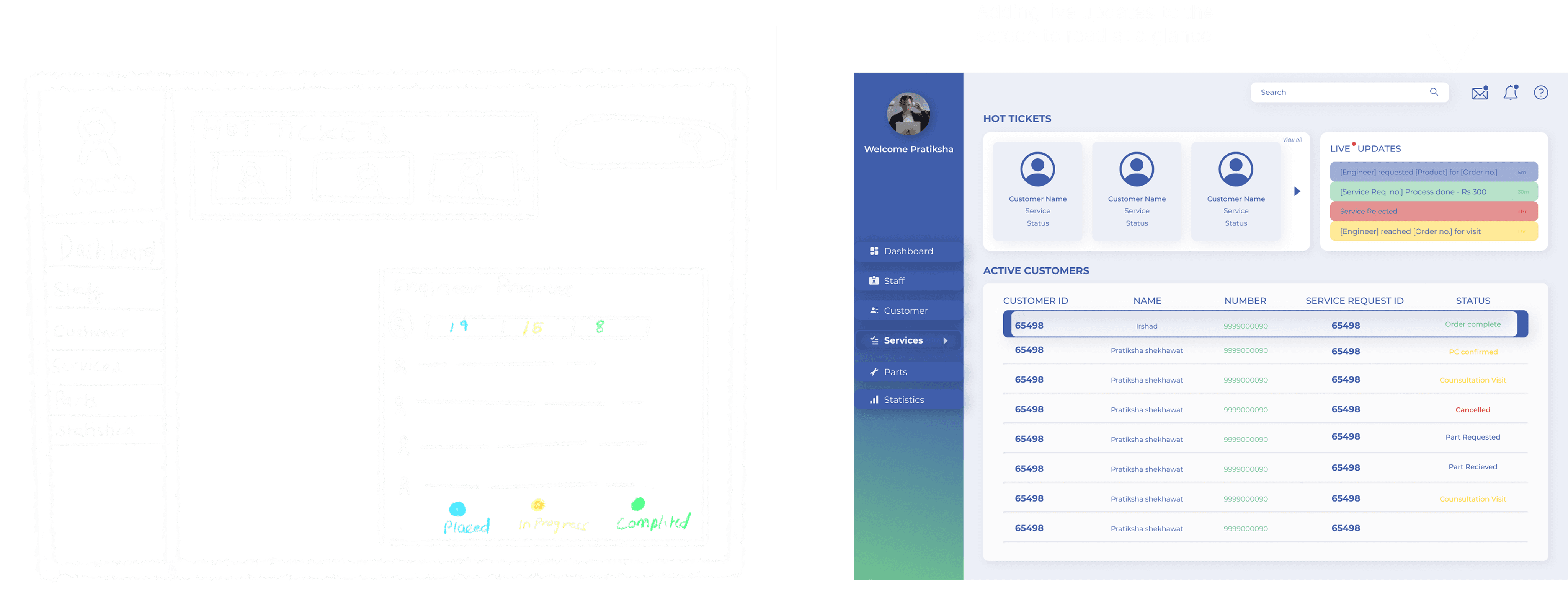
We conducted Low fidelity testing to analyze and iterate on the user flow for all the stakeholders. Doing this provided valueable insights, allowing us to iterate and refine on the app flow and the UI based on Stakeholder's experiences.
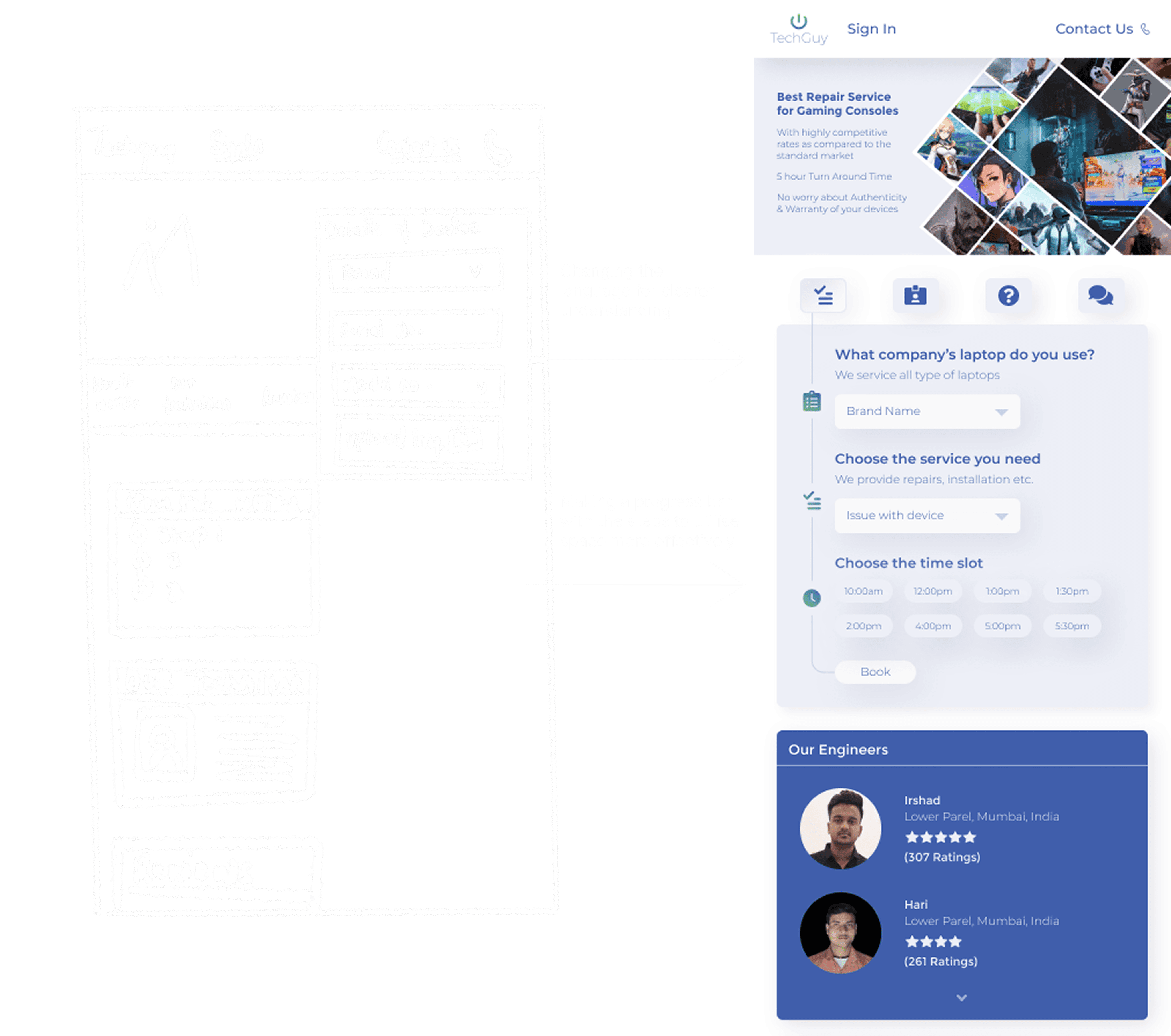
How We Solved It

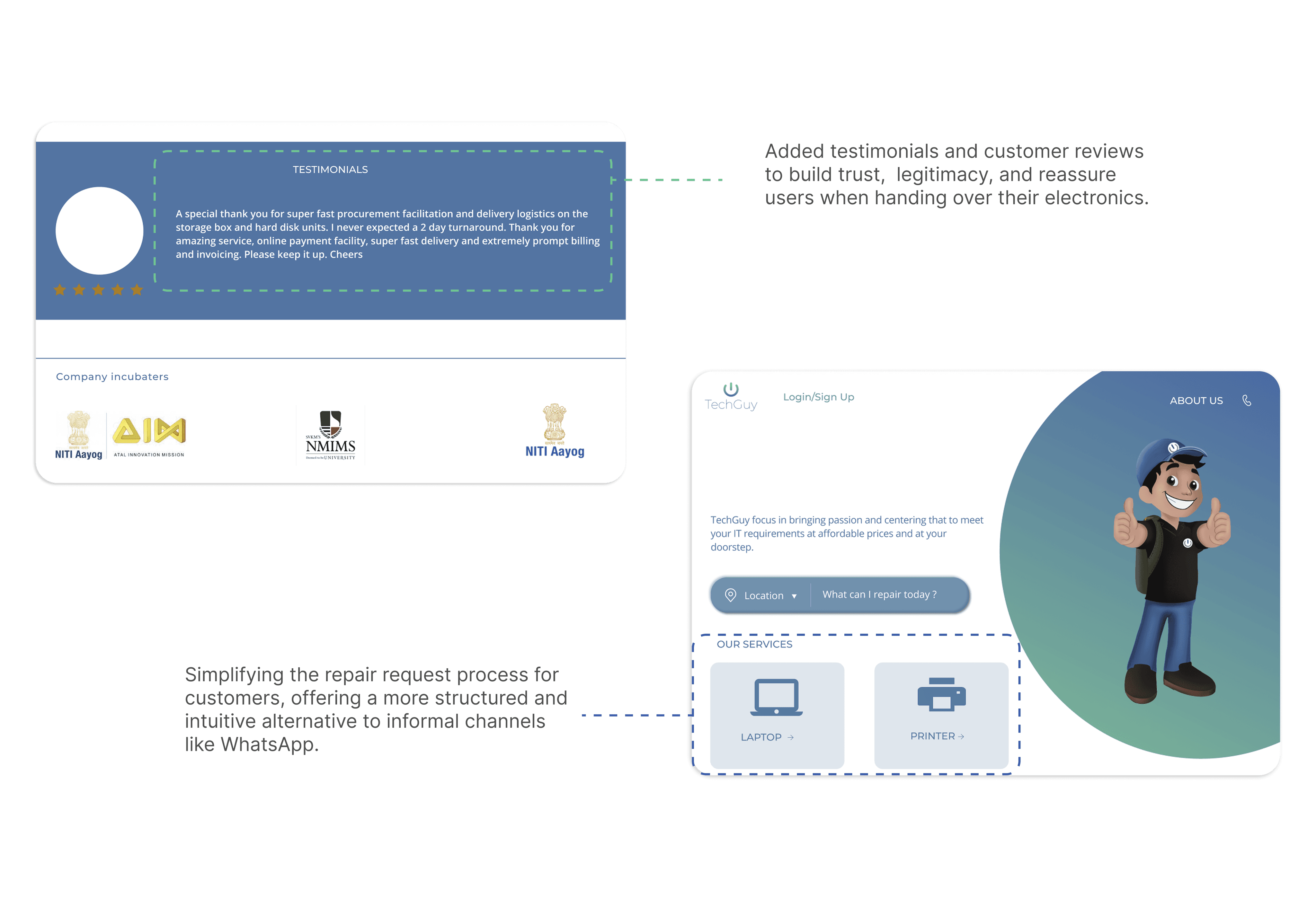
Customer Interface
Simplifying service requests and build trust through clear status tracking, request history, and a structured, branded experience, replacing informal WhatsApp communication.

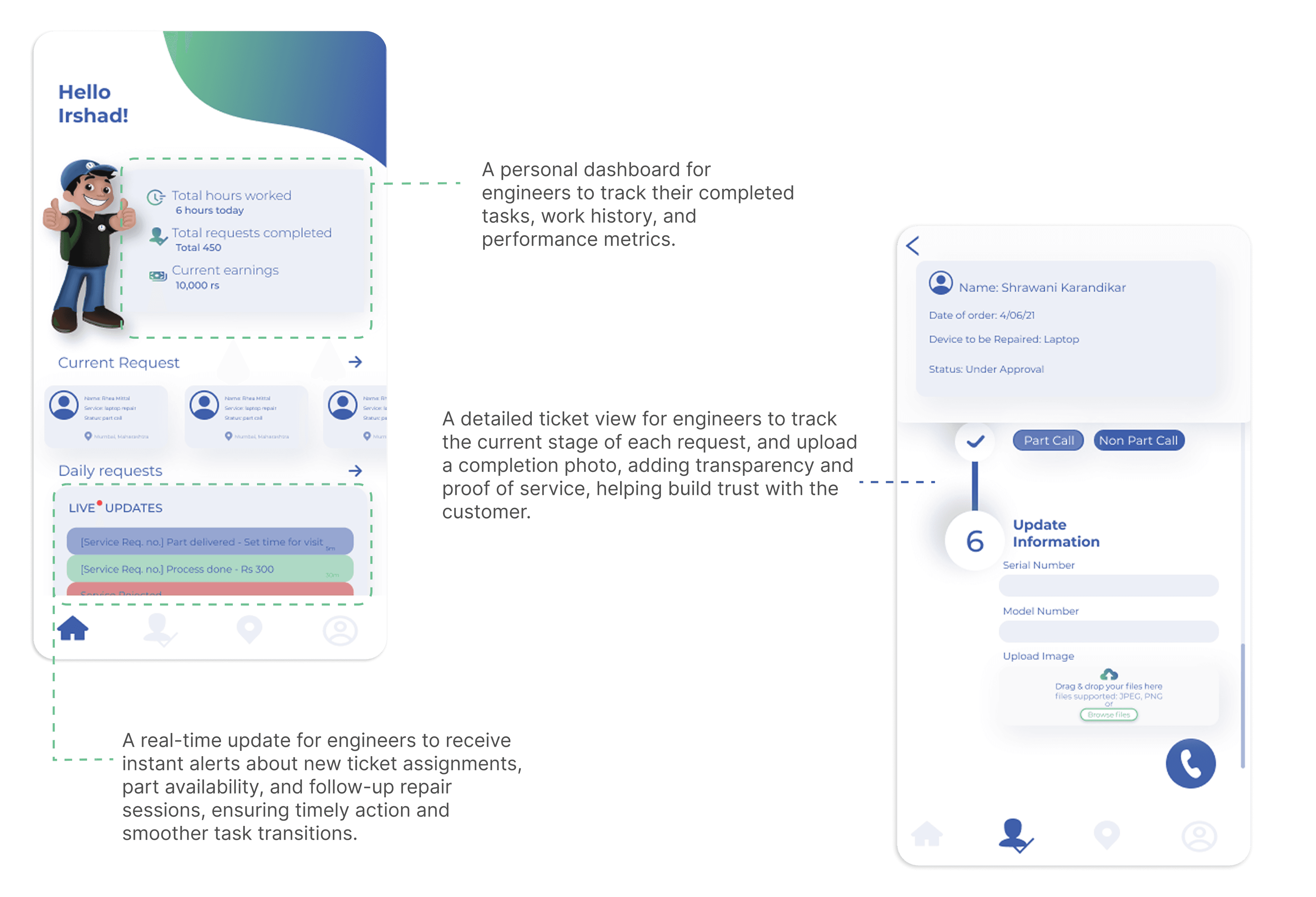
Engineer Interface
Streamlining coordination with a visual dashboard that tracks requests, part orders, and team updates, eliminating the chaos of managing everything via WhatsApp.

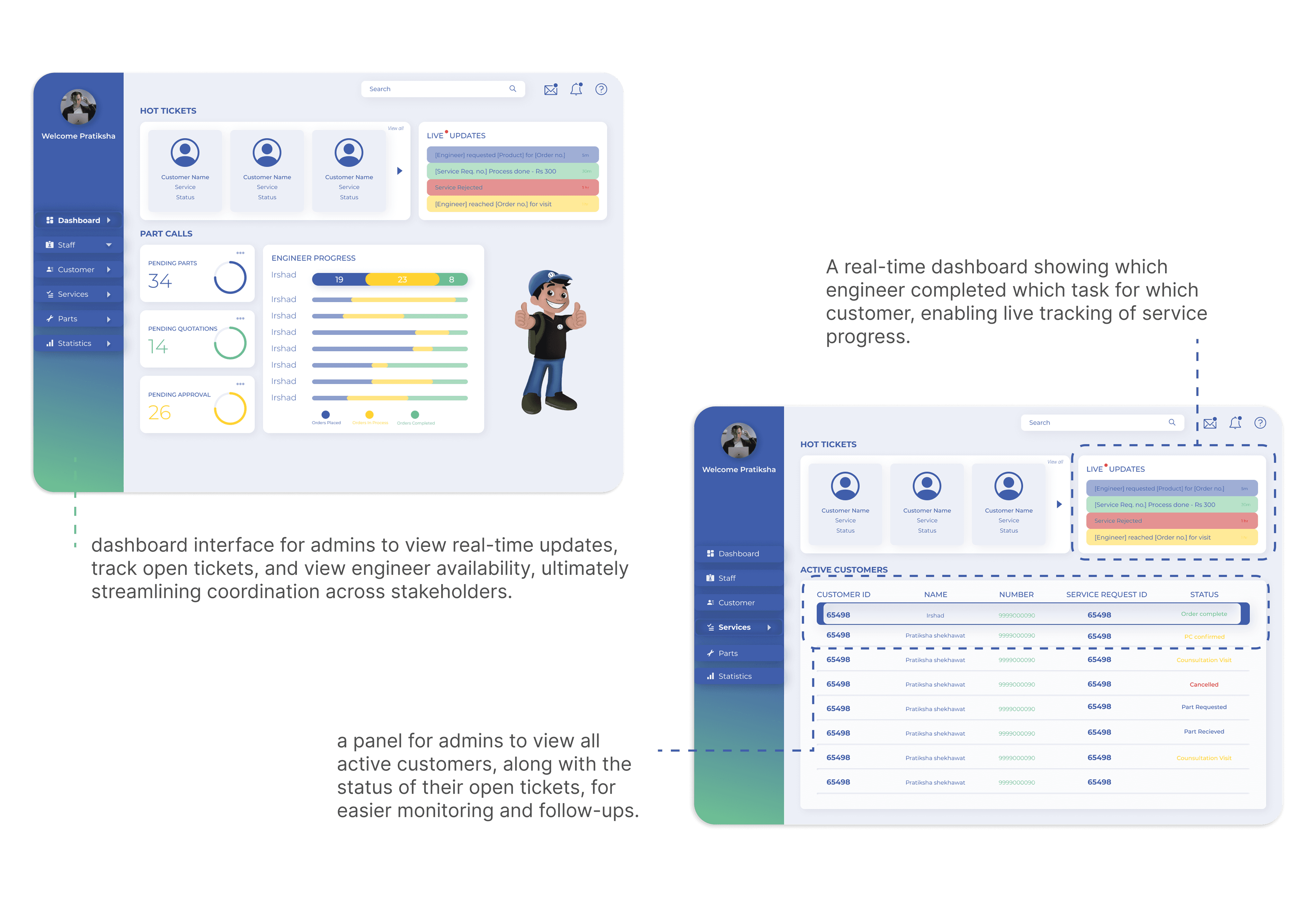
Admin Interface
Creating an all-in-one admin dashboard that tracks requests, manages parts orders, and provides an internal messaging system to connect admins, engineers, and vendors, eliminating the chaos of WhatsApp communication.
Key Takeaways
This project highlighted the impact of thoughtful, user centered design in simplifying everyday workflows. By creating interfaces for each stakeholder, customers, engineers, and admins, we replaced scattered WhatsApp communication with a more structured, reliable system that made tracking, coordination, and service transparency much easier.
It also taught me how critical thinking and fast decision-making play a big role in product management, especially in a startup setting where you’re constantly balancing user needs, business priorities, and engineering timelines.
Most of all, I saw how small details in UI, like real-time updates, part tracking, and the ability to upload images, can go a long way in building trust, documenting service, and helping users feel more in control. Collaborating across design, tech, and operations made it clear that great products come from shared problem-solving.